Whole fruit or juice? What the latest heart-health headlines miss
A large survey found differences in fruit-eating habits, not proof that juice causes heart disease. Here is how to use the evidence in everyday meals.
What the study actually found
Research explained. A 2026 analysis of 371,038 US adults found that people reporting certain cardiovascular conditions ate whole fruit less frequently. For example, those reporting a previous heart attack averaged 0.98 fruit-eating occasions daily, versus 1.07 among those without one, before demographic adjustment. That difference is 0.09 occasions per day, not a reduction in heart-attack risk. Original study, Table 5.
Researchers analysed a 2019 survey, not an experiment assigning fruit or juice. After adjustment, juice frequency was higher with a reported heart attack but lower with high cholesterol; differences for blood pressure, coronary disease and stroke were not statistically significant. The findings do not show that juice caused illness or that replacing it prevented disease.
Why a large sample does not settle the question
The survey measured frequency, not portion size. Diet could have changed after diagnosis; activity and several other dietary factors were not controlled. It studied adults, not teenagers. Funding included USDA support; one author disclosed FutureCeuticals employment and tuition reimbursement. Methods, limitations and disclosures.
When reading a headline, ask: were people given different foods, or were their existing habits compared? And did the researchers measure future illness, or ask about past diagnoses? Those questions determine what the result can mean for your shopping basket.
A useful everyday distinction
Whole fruit and juice can both fit into eating patterns, but they are not identical. The British Dietetic Association notes that juicing removes most of the fibre, while fresh, frozen and tinned fruit all count towards fruit-and-vegetable intake. Whole fruit does not have to mean expensive fresh berries. BDA fruit guidance.
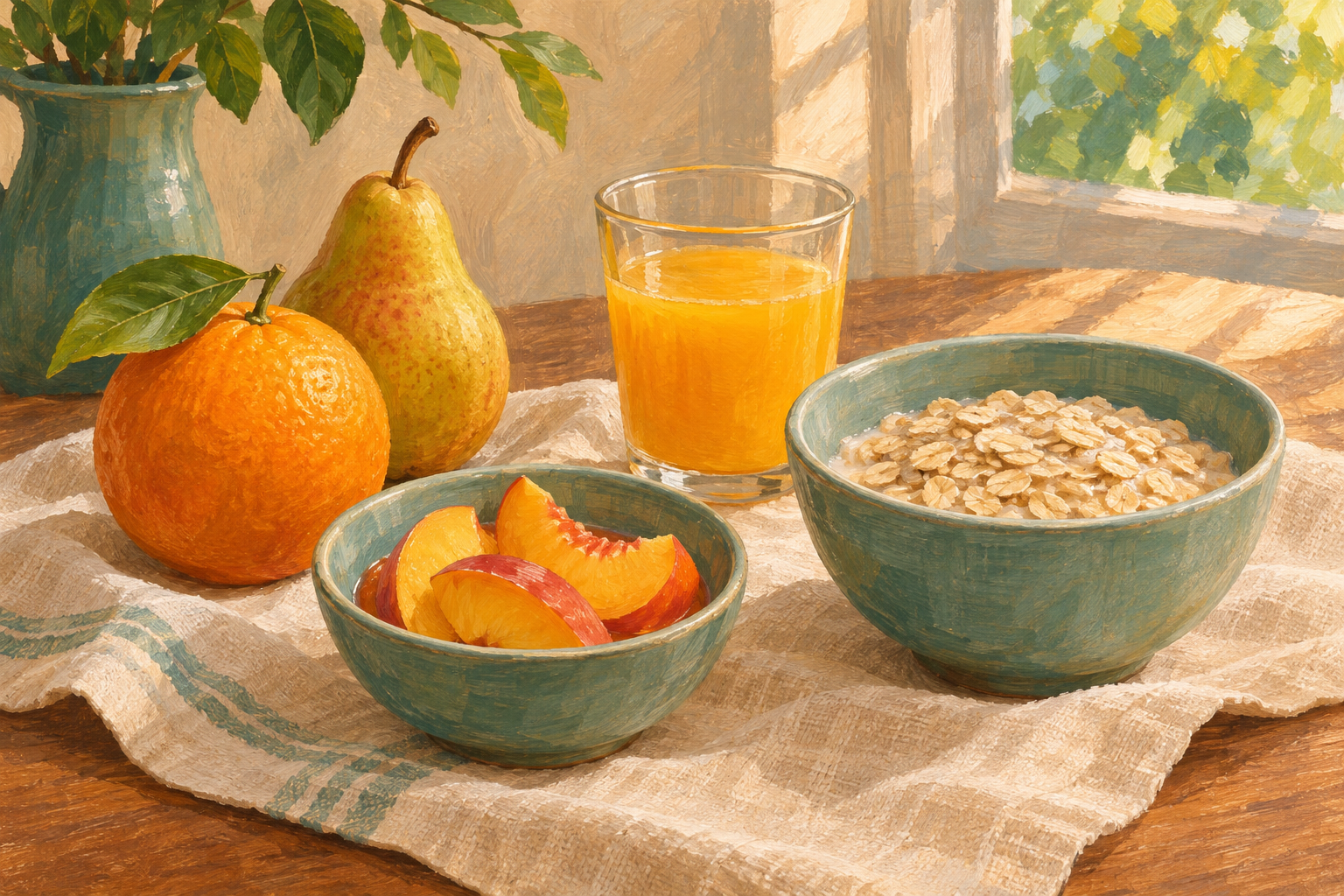
For a practical decision, start with the meal you already eat. Could you add a pear to lunch or peaches to breakfast? That is a clearer task than trying to turn a headline into a personal heart-risk calculation.
If you enjoy juice, give it a place
UK NHS guidance limits juice and smoothies to a combined 150 ml daily, preferably with a meal, and counts them as at most one of your five-a-day. That is established guidance, not a threshold discovered by this survey. Its mealtime advice also concerns tooth decay. NHS portions and juice guidance.
A smoothie containing several fruits does not automatically count as several portions under that system. Check whether a carton is 100% juice or a juice drink, and read its serving size rather than assuming the whole bottle is one serving.
Make fruit easier to eat this week
- For a rushed morning: keep a banana or pear beside the breakfast foods you already use.
- For a packed lunch: choose a fruit you enjoy carrying and eating, rather than one that needs preparation you rarely have time for.
- For a cupboard backup: keep tinned peaches or pears in juice and serve the fruit with a meal when fresh supplies run out.
These are convenience ideas, not a prescription to replace a full meal with fruit. For ages 16–17, focus on enough food, variety and regular meals rather than using the adult survey as a reason to restrict eating.
If you use MacroTracker, its food diary can help you notice whether fruit appears in your usual meals. Log fruit and drinks as the foods you actually consumed; the diary does not calculate the heart-health benefit of a swap. For more meal ideas, see our practical breakfast guide.
Sources
AI-assisted article, checked against the linked sources. No clinical review is claimed. General education, not individual medical advice. Read our editorial standards and correction policy.