Breakfast that fits your morning: start with the obstacle
A practical breakfast guide for busy mornings, with a clear explanation of what student research can and cannot tell us.
What the research actually found
Evidence-based explainer. In a 2024 CDC analysis of the 2023 US high-school survey, 17.9% of students reported eating no breakfast during the previous seven days. Breakfast skipping occurred alongside poorer self-reported grades, lower school connectedness and persistent sadness or hopelessness. This does not show that breakfast treats depression or raises grades. Original CDC analysis.
The survey included 20,103 students in grades 9–12; nobody was assigned a breakfast. It measured behaviours at one time, relied on recall, and could not adjust for household income. It also did not measure what breakfast contained. The 17.9% describes how common skipping was, not a benefit from changing it.
Fix the obstacle before designing the perfect meal
The American Academy of Pediatrics suggests making food available ahead of time, considering portable choices and looking beyond traditional breakfast dishes. AAP breakfast guidance. Here is a practical way to apply that advice:
- No time: choose one option you can assemble the night before, rather than collecting five new recipes.
- No appealing food: list two foods you actually enjoy in the morning. A familiar sandwich can be more workable than an elaborate smoothie you dislike.
- No food available: ask your school, college or local support service what meal options are available. This is an access problem, not a motivation failure.
- A changing timetable: choose a home option and a portable alternative so one rushed morning does not undo the plan.
Three starting combinations
These are flexible meal ideas, not a tested breakfast programme or prescribed portions:
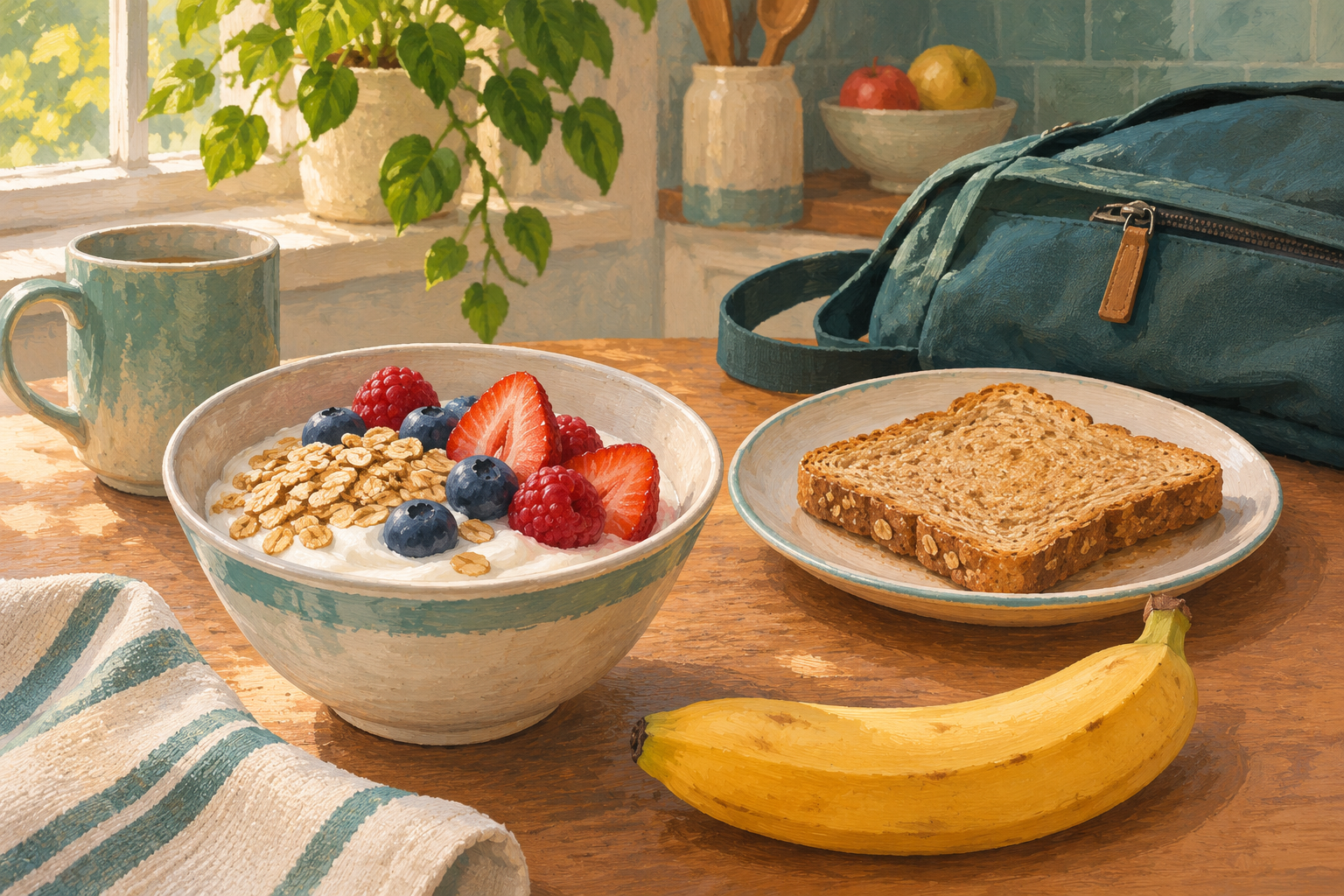
- Yogurt, oats and fruit; choose an alternative that suits your dietary needs.
- Toast with eggs or beans, with fruit alongside if you like.
- A sandwich with a filling you enjoy, prepared and stored safely for the morning.
Adapt to allergies, appetite, budget and what is available. Breakfast does not need a special powder or an exact protein score. For plant-based drinks, our label guide explains why products are not nutritionally interchangeable.
Judge whether the plan works in real life
Try your chosen option on a few ordinary mornings. Ask: Was it available? Did I enjoy it? Did the timing suit my day? What would make tomorrow easier? These questions test convenience and preference; they cannot establish a medical benefit.
The school survey is not evidence for adult weight-loss rules. For ages 16–17, keep the focus on enough food and supportive routines, not compensating for meals or chasing a lower calorie total. If persistent appetite difficulties or distress are affecting eating, seek support from a healthcare professional.
Keep a useful record
If you already use MacroTracker, its food diary can record the breakfasts you eat. Use that record to recall workable meals, not as a score of how good your morning was. The app cannot determine why someone skips breakfast or measure school performance.
Sources
AI-assisted article, checked against the linked sources. No clinical review is claimed. General education, not individual medical advice. Read our editorial standards and correction policy.