One serving on the label is not necessarily one bowl
A cereal study illustrates why a bowl and a label serving can differ. Learn how to match nutrition figures to what you eat without making the label a target.
What the cereal study found
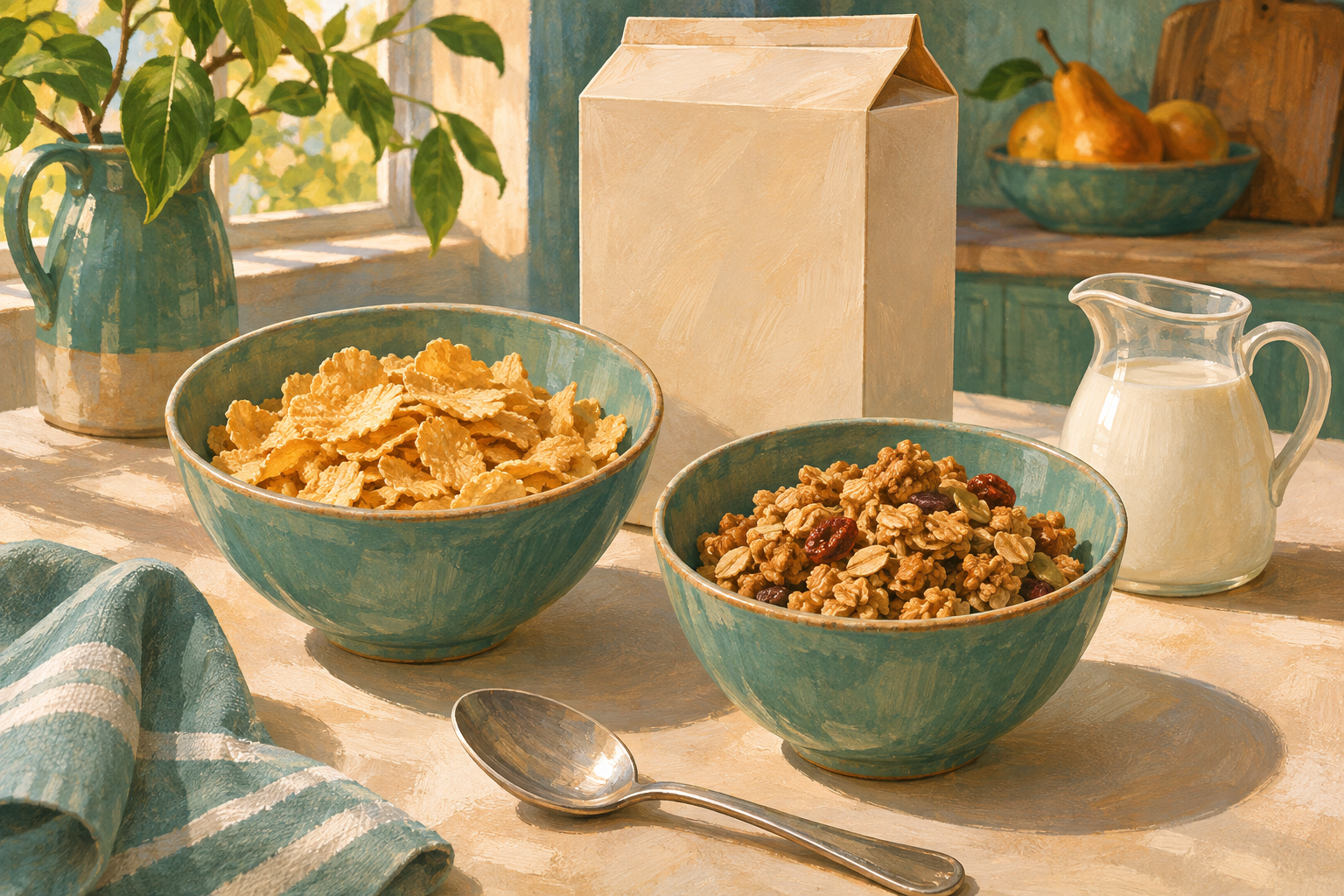
In a 2021 study of 169 adults in Chester, UK, the median amount of granola people poured was 95 g, compared with the packet's 45 g serving. The median for plain flaked cereal was 37 g against a 30 g label serving. Participants poured what they would serve at home; researchers weighed it. Original study.
That is a comparison with package amounts, not proof that anyone ate too much. The study did not measure long-term health effects. This is an established-evidence explainer, not a new discovery.
A useful observation, not a personal portion rule
Most participants were students; hunger and time of day were not controlled, and the tested products did not represent every cereal. The authors reported no specific funding or conflicts. Study limitations.
The practical lesson is to check what a number describes before using it. The word bowl does not tell you the weight of its contents. Nor does a serving printed on a package automatically describe your appetite, activity or nutritional needs.
Read the heading above the numbers
Check whether nutrition information is given per serving, per 100 g, or for the entire package. On US Nutrition Facts labels, the FDA explains that a serving reflects what people typically consume, not a recommendation for how much to eat. A package can contain several servings. FDA serving-size guidance.
When comparing two products, put their figures on the same basis. A smaller amount listed per serving may simply reflect a smaller defined serving. Also check whether the information describes the food as sold or after preparation, including any added ingredients.
A simple worked example
Imagine a fictional cereal lists 8 g of protein per 100 g. If your bowl contains 60 g of that cereal, its protein contribution is 8 × 60 ÷ 100 = 4.8 g. Milk, yogurt or other additions would be counted separately unless the figures already include them.
Alternatively, suppose the same product lists 3.2 g protein per 40 g serving. A 60 g amount is 1.5 label servings: 3.2 × 1.5 = 4.8 g. Both routes describe the same amount of food. These invented numbers demonstrate the arithmetic; they are not measurements from the study or a suggested breakfast size.
Use the information without making meals a maths test
If a food entry seems surprisingly different from its package, first check the selected quantity and unit. A per-100-g entry, a per-serving entry and a whole-pack entry can all be correct while describing different amounts. Our raw-versus-cooked guide covers another common mismatch.
There is no need to weigh every meal to benefit from understanding labels. For ages 16–17 especially, a package serving should not become a ceiling on food needed for growth, school and activity.
When using MacroTracker's food diary, check that the food and quantity you select match what you intend to record. Treat the result as useful information, not a judgement about whether your bowl was the right size.
Sources
AI-assisted article, checked against the linked sources. No clinical review is claimed. General education, not individual medical advice. Read our editorial standards and correction policy.