Ultra-processed food: improve the meal without banning convenience
A practical guide to processed-food labels, useful convenience ingredients and realistic meals, with the limits of the evidence explained.
Start with what the food contributes
A packaged ingredient can help you put together a useful meal. The question is what it contributes and how it fits your usual eating pattern. This established-guidance explainer focuses on that decision, rather than treating the word processed as a complete verdict on a food.
In its April 2025 evidence update, the UK Scientific Advisory Committee on Nutrition found continuing associations between greater ultra-processed-food consumption and adverse health outcomes, but noted that food subgroups did not all show the same pattern. SACN evidence update.
What the evidence leaves uncertain
The update described a largely observational evidence base, inconsistent adjustment for factors such as socioeconomic circumstances, and difficulties classifying foods. It did not formally assess study quality. These limitations make it difficult to separate processing itself from other differences between diets and people. Methods and limitations.
This does not make food choices irrelevant. It means a processing category alone is a poor substitute for asking what you actually eat. The report is a dated assessment, not a claim that no further research has appeared since 2025.
Processing and nutritional value are different questions
Processing includes useful actions such as freezing, canning and pasteurising. The NHS also notes that foods classed as ultra-processed, including wholemeal sliced bread, higher-fibre cereals and baked beans, can fit a healthy diet. NHS guidance.
A packet therefore tells you little on its own. Ask what the food contributes, what you will eat with it and whether it helps you make an adequate meal on a difficult day. The alternative to a convenient ingredient may be skipping dinner, not preparing an elaborate fresh recipe.
Build a useful meal from convenient parts
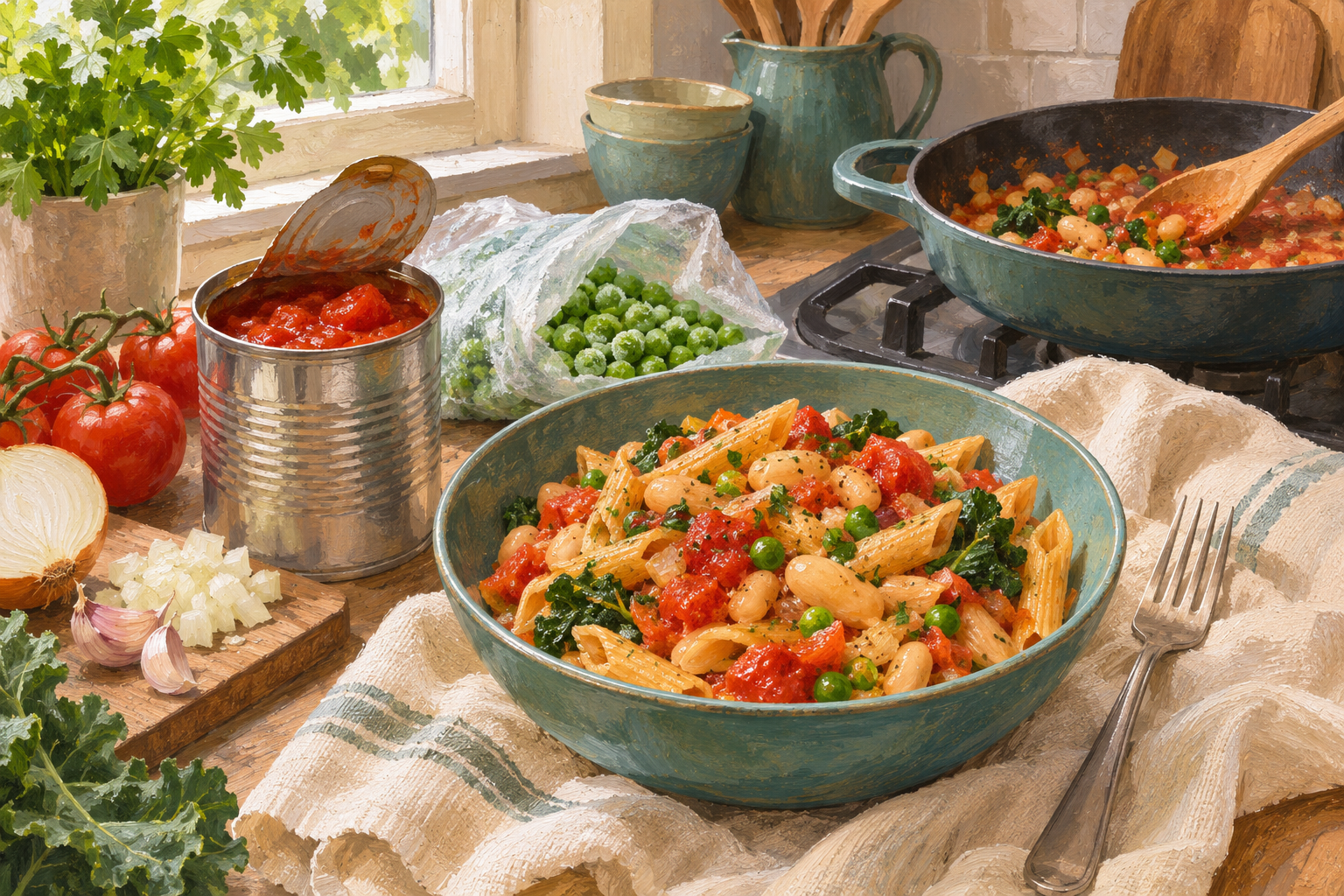
Try choosing a familiar base, a substantial accompaniment and a vegetable you enjoy. Examples include pasta with beans and frozen vegetables, toast with eggs and tomatoes, or microwave rice with tofu and a vegetable mix. Follow each product's preparation and storage instructions.
These are meal-building ideas, not the menus tested in the trial. Their advantage is practical: you can keep several components available and combine them without starting from scratch. Our fresh-or-frozen guide can help with one of those choices.
Compare products you would really buy
Nutrition labels can help compare salt, saturated fat and sugar in similar foods, as the NHS recommends. Reading processed-food labels.
Compare two sauces you like, for example, rather than judging a sauce against an unrelated snack. Also consider price, taste, preparation time and whether the package gets used. Start with one repeat purchase instead of attempting a complete cupboard overhaul.
For ages 16–17, enough food and a varied routine matter more than chasing a zero-UPF rule. MacroTracker's food diary can help you review the meals you actually assemble. It does not diagnose harm from an ingredient or make a food morally good or bad.
Sources
AI-assisted article, checked against the linked sources. No clinical review is claimed. General education, not individual medical advice. Read our editorial standards and correction policy.