Fresh or frozen vegetables? Buy for the meals you will actually cook
A nutrient study challenges the idea that fresh always beats frozen. Learn what it measured, what it did not, and how to plan practical vegetable choices.
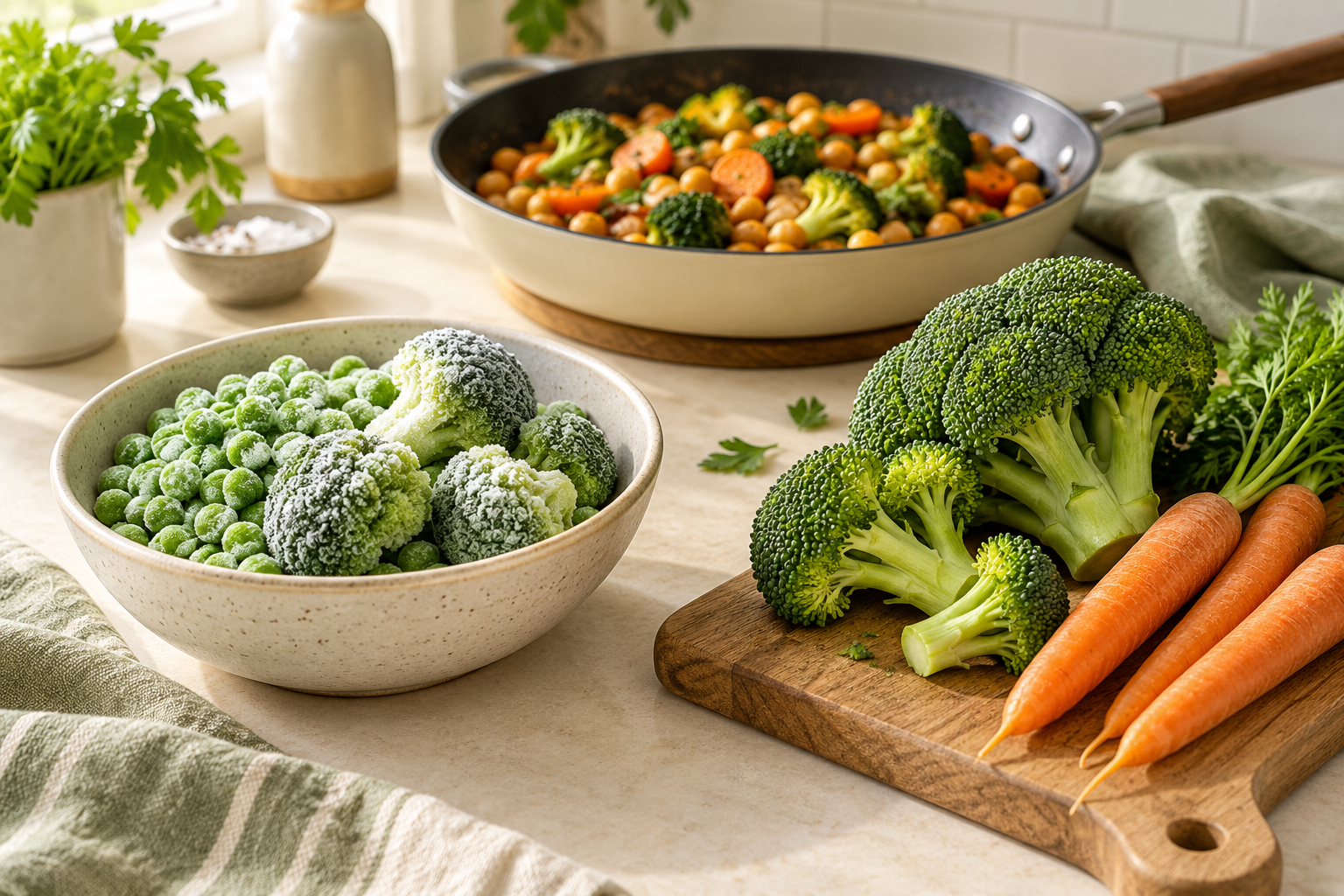
What did the study actually find?
Fresh produce did not consistently contain more of the measured vitamins than frozen produce. A 2017 laboratory study compared eight fruits and vegetables bought fresh, bought frozen, or refrigerated for five days after purchase. Researchers measured vitamin C, beta-carotene and folate. Most comparisons showed no statistically significant difference; when differences occurred, frozen more often exceeded stored-fresh than the reverse. Original study · University-hosted abstract.
This is an established-evidence explainer, not a new trial. There is no single percentage advantage that describes every vegetable and nutrient.
The limits matter
This was food analysis, not a trial measuring people’s health. It cannot establish that one format prevents disease or provides more of every nutrient. The Frozen Food Foundation funded the work and helped determine the foods and nutrients selected. Results should not be generalized to every product or storage condition.
Choose around the meal, not the label
The NHS counts fresh, frozen and canned fruit and vegetables towards 5 A Day. You can mix formats rather than treating your shopping basket as a competition between fresh and frozen.
- For a meal you have already planned: choose the format you enjoy preparing and eating. Fresh carrots for a crunchy side and frozen peas for a cooked dish can belong on the same shopping list.
- For an uncertain evening: a bag of vegetables you can portion out is a useful backup, provided you have freezer space and follow the pack’s storage instructions.
- For a recipe where texture matters: choose for that recipe. A nutrient comparison does not tell you whether you will like the texture in a salad or a stir-fry.
Compare the cost of what you will use
Check the shelf price per kilogram, then ask how much of the pack fits your meals. Frozen is not automatically the cheapest choice in every shop.
Here is a fictional example: a 1 kg bag costing 3 currency units supplies five 200 g amounts at 0.60 each. A 500 g fresh pack costing 2 units supplies the same amount at 0.80, if you use all of it. Those are shopping calculations, not live prices or recommended serving sizes. Waste, preparation and freezer space can change the practical choice.
Before buying a large pack, name two meals you would use it in. If you cannot, a smaller pack may fit your week better even when its unit price is higher.
Give your backup vegetables a specific job
Try one of these meal ideas using quantities that suit your household:
- Pasta night: serve peas with pasta, your usual sauce and a protein food you enjoy.
- Curry night: use spinach or cauliflower alongside chickpeas, with rice or bread.
- A quick lunch: pair cooked mixed vegetables with eggs or tofu and toast.
These are meal ideas, not recipes tested by the study or nutritionally interchangeable meals. Follow the package’s cooking instructions; do not assume a frozen product is ready to eat. Keep vegetables as part of a satisfying meal, including for younger readers, rather than using them to replace the rest of your food.
Log the product you actually used
If you keep a food diary, distinguish plain vegetables from a prepared product containing sauce or other ingredients. In MacroTracker, you can use food search or barcode scanning to find the relevant entry, then check its serving description against what you ate. The diary is a record of your meals, not a test of whether you bought the “best” vegetable.
For another practical shopping decision, read our guide to whole-grain swaps. Start with one meal you want to make easier this week.
Sources
AI-assisted article, checked against the linked sources. No clinical review is claimed. General education, not individual medical advice. Read our editorial standards and correction policy.