Whole grains: small benefits, practical swaps, no magic serving target
An analysis of 87 trials found modest improvements in heart-health risk markers. Here is what the numbers mean and how to make useful everyday swaps.
What did the review find?
Whole-grain diets modestly improved several cardiovascular risk markers compared with control diets. A September 2026 review included 87 randomized trials in adults. In its main comparison, LDL cholesterol was about 0.13 mmol/L lower with whole grains; the 95% confidence interval was 0.08–0.17 mmol/L lower. That result came from 69 trials involving 5,932 participants. Read the original review.
This is evidence about risk markers, not a direct demonstration that the diets prevented heart attacks. Controls included refined-grain, low-whole-grain and usual diets, so this was not one identical swap tested everywhere.
Why the serving headlines need context
The researchers also modelled different intake levels. Many outcomes showed their largest effects around 60–100 grams daily of whole grains by dry weight. That is not the same as weighing cooked rice or a finished sandwich. Sparse data at higher intakes made exact thresholds uncertain.
The review was funded by Tabriz University of Medical Sciences; the authors reported no personal or financial conflicts. Evidence certainty varied by outcome. Use the findings as context for food choices, not a personal cholesterol treatment or a precise gram target.
Start with a meal you already eat
The NHS recommends choosing wholegrain varieties where possible and identifies foods such as wholegrain bread, brown rice and wholewheat pasta as fibre sources. That makes familiar meals a sensible place to start.
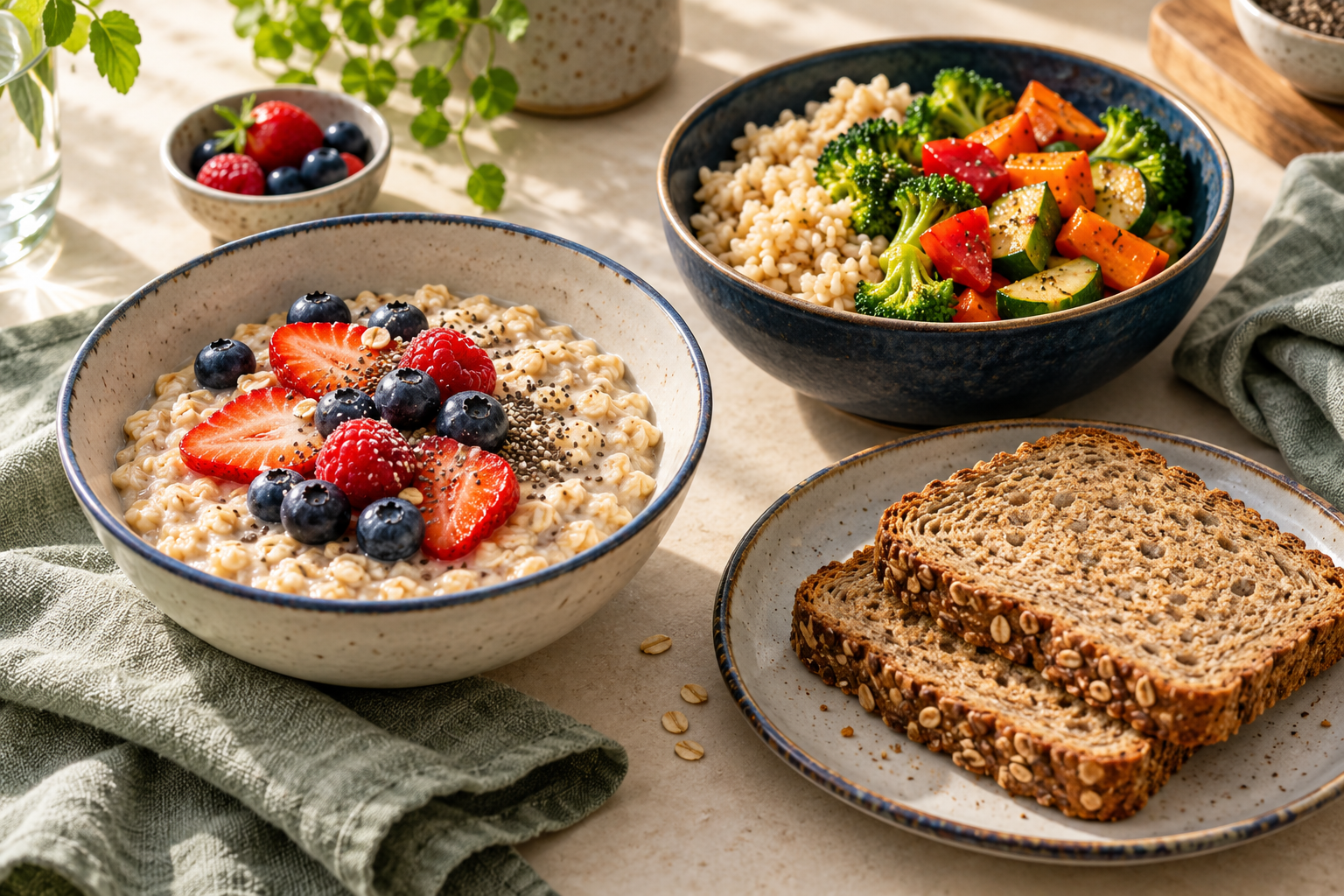
- Breakfast: try porridge with fruit, or choose a wholegrain cereal you enjoy.
- Lunch: keep your usual sandwich filling and try wholemeal bread.
- Dinner: try wholewheat pasta with your usual sauce, or brown rice with vegetables and your preferred protein source.
These are options, not nutritionally identical portions or a meal plan from the trials. Pick one that fits your taste, budget and preparation time. You do not need to replace every food at once.
Make the choice practical at the shop
Before buying a new staple, ask three questions:
- Will I actually use it? A food you can fit into an existing meal is easier to plan for than an unfamiliar ingredient bought only because of a headline.
- What does the product say? Read the ingredients and nutrition information rather than assuming a photograph or a prominent fibre claim tells you everything. Compare similar serving sizes when comparing products.
- What is the cost per useful portion? Consider pack size, preparation time and how much might go unused. A premium product is not required to try a different staple.
A simple shopping note might read: 'Try wholemeal bread for weekday lunches; keep the filling the same; check whether we like it before buying another loaf.' That is a concrete experiment in convenience and preference, not a promise of a measurable health change.
Keep the whole meal in view
Whole grains do not need to crowd out other foods. The NHS recommends varied fibre sources, including fruit, vegetables and pulses. Build meals you enjoy rather than concentrating every decision on one ingredient.
If you follow a prescribed diet or have a food allergy, choose within that guidance. For younger readers, this is about nourishment and variety, not eating less or chasing a body-weight target.
Make your food log match your food
If you use MacroTracker, choose the entry for the product you actually ate. Check whether a rice or pasta entry describes the dry or cooked food, and match your recorded serving to that description. A correct food name with the wrong preparation state can make a diary confusing.
For another practical way to look at meal patterns, see our three-day meal review. You can use a notebook instead; the goal is a useful record, not a perfect score.
Sources
AI-assisted article, checked against the linked sources. No clinical review is claimed. General education, not individual medical advice. Read our editorial standards and correction policy.