Meal prep with rice: plan the cooling, not just the cooking
A practical food-safety explainer for rice lunches: cooling, storage, reheating and a simple way to label meals before the week gets busy.
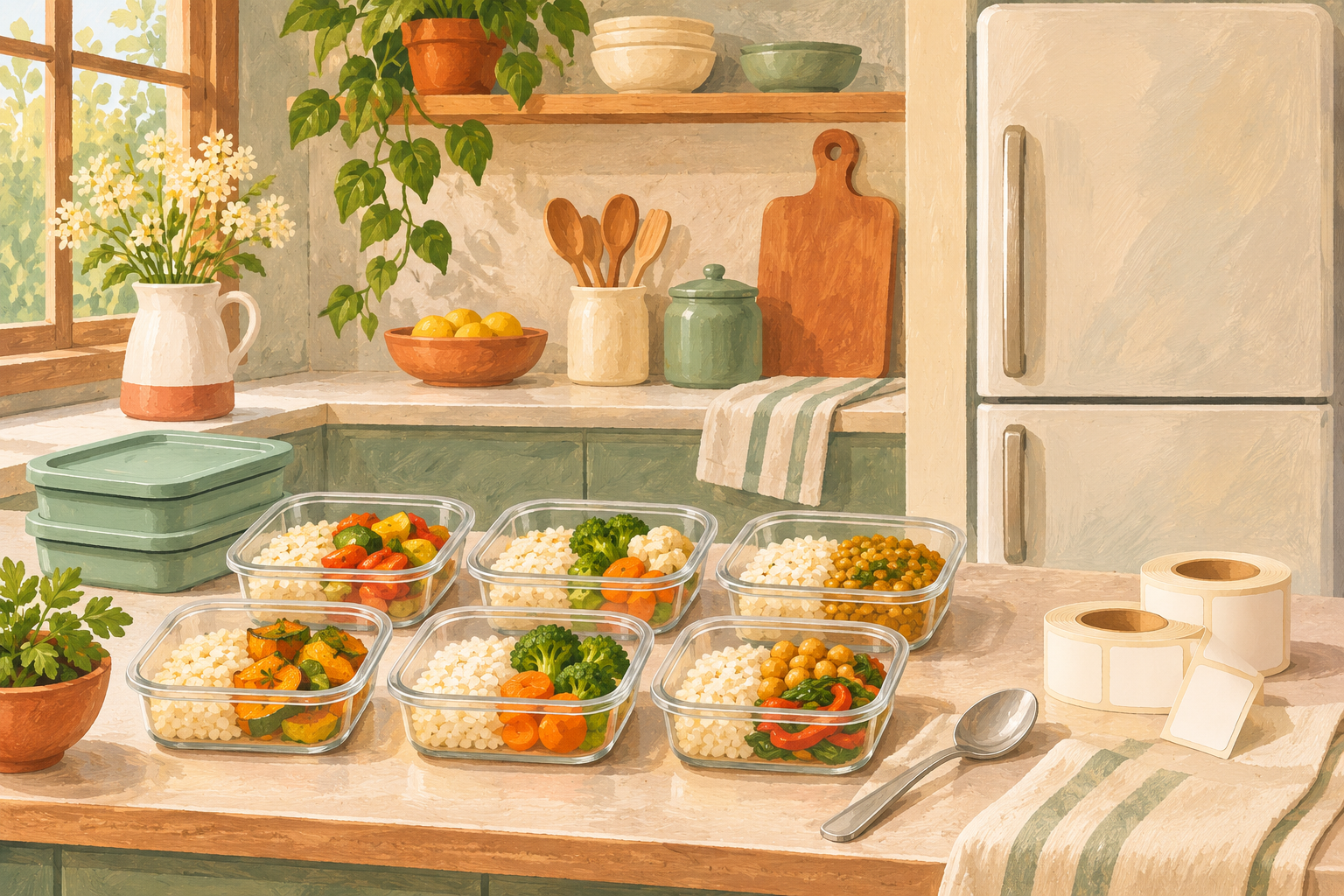
A rice lunch needs a storage plan
Established-evidence explainer. Cooking a batch of rice does not make it safe to leave on the counter. Food Standards Scotland explains that some Bacillus cereus spores can survive cooking and that slow cooling can allow toxin production. Its household advice is to chill rice quickly, ideally within an hour, refrigerate and eat within 24 hours, and reheat only once until steaming hot throughout. Official rice-storage guidance.
That makes “Sunday rice for every weekday, kept only in the fridge” a poor match for this guidance. Plan a smaller batch or suitable freezer portions instead.
What the laboratory evidence tells us
A 2023 experiment deliberately added spores from eight bacterial strains to rice, cooked it, then stored samples at different temperatures. Four strains grew after cooking at 30°C and three at 25°C. This demonstrates that cooking does not always eliminate the problem; it does not estimate your personal chance of food poisoning or establish a safe time on your kitchen counter. The study was university-funded, and the authors reported no conflicts. Original laboratory study.
Use household food-safety guidance for the practical rules, rather than translating a laboratory incubation time into a home storage allowance.
Build the storage step into the recipe
- Before cooking: decide which meal will be eaten now and which will be saved. Have clean, shallow containers and fridge or freezer space ready.
- After cooking: divide saved rice into smaller portions to help it cool quickly; do not leave the whole batch in its cooking pot. Follow the rice-specific timing above.
- Before putting it away: label the contents and cooking date/time. A label helps you act on a storage limit; it does not extend one.
- At the next meal: heat only the portion you intend to eat, following safe reheating instructions.
The container-and-label routine is an organizational suggestion, not a tested intervention. For commercial products, also follow their packaging instructions.
Do not treat every leftover the same
The UK Food Standards Agency’s student guide advises refrigerating or freezing ordinary leftovers within one to two hours, with faster cooling for rice. It also distinguishes a safety-related use-by date from a quality-related best-before date. Smell cannot establish that a food past its use-by date is safe. Follow the specific food’s instructions rather than applying a single “meal prep lasts a week” rule. Student food-safety guide.
This article uses UK household guidance; advice can differ by jurisdiction and food. For packed meals, include safe cold storage in the plan, not just the cooking time.
Keep the diary and the label separate
MacroTracker can help you record the meal you ate. The label on the container should carry the storage information: a food-diary entry is not a food-safety check. For meal ideas, our beans-and-lentils article offers simple combinations you can adapt to your appetite. Meal prep should make adequate, enjoyable meals easier at school, work or home.
Sources
AI-assisted article, checked against the linked sources. No clinical review is claimed. General education, not individual medical advice. Read our editorial standards and correction policy.