Butter or cooking oil? What the 17% headline really means
A large study linked replacing butter with plant oils to lower mortality. Understand the model, its limits and a practical way to choose cooking fats.
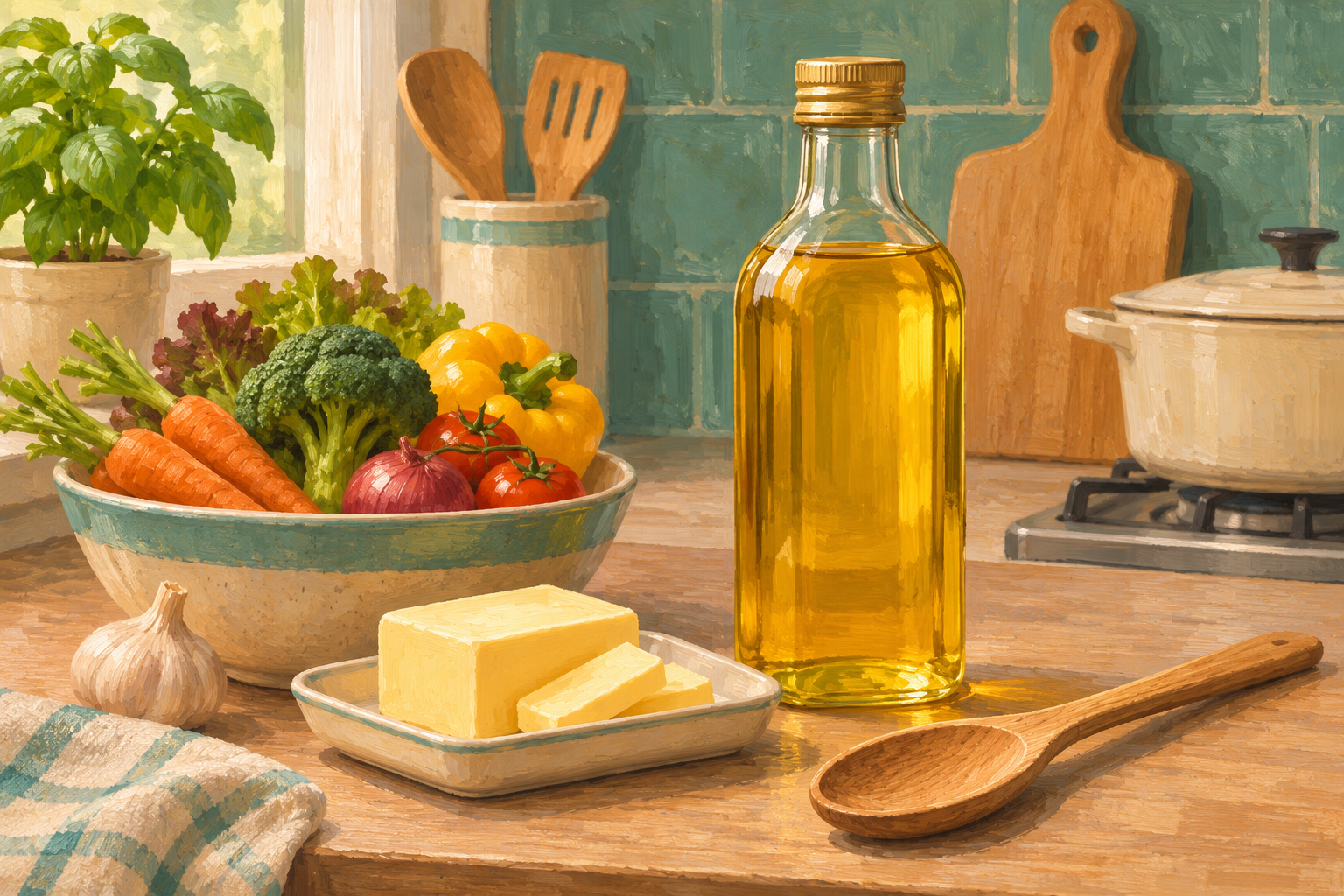
A useful finding, not a personal guarantee
Evidence-based explainer. A 2025 study of 221,054 US adults estimated that replacing 10 grams of daily butter intake with plant oils was associated with a 17% lower relative hazard of death during follow-up (hazard ratio 0.83; 95% confidence interval 0.79–0.86). This was a statistical substitution model, not a trial assigning people to make that swap. Original JAMA Internal Medicine study.
Researchers followed three health-professional cohorts for up to 33 years, using repeated food questionnaires. Participants were predominantly White adults; average starting ages across cohorts were roughly 36–56. Diet-reporting errors and unmeasured differences between people remain possible. The estimate is not a 17-percentage-point reduction in your personal risk and does not establish a teen intake target.
Use the broader guidance when choosing a fat
NHS guidance supports replacing some saturated fat with unsaturated fat to help lower cholesterol. Olive and rapeseed oils are examples of sources of unsaturated fats; butter, coconut oil and palm oil contain substantial saturated fat. Being plant-based alone does not settle the comparison. NHS fat guidance.
The cohort study was NIH-funded; one author disclosed outside grants including from the International Nut and Dried Fruit Council. Its findings are one part of the evidence, not a ranking of every bottle in the supermarket. Funding and disclosures.
Make one ordinary cooking decision
Start with a meal you already cook. If butter is your usual cooking fat, consider an olive or rapeseed oil that suits the recipe and the product’s cooking directions. Choose on taste, price and how you will actually use it. You do not need a premium bottle to begin comparing options.
For example, try oil in a familiar vegetable dish, then decide whether you like the result. This is a practical recipe experiment, not a promise of a measurable health change. Some baking recipes depend on butter’s texture, so use a recipe designed for oil rather than assuming every substitution works gram for gram.
Compare like with like on the label
Compare saturated fat using the same unit on both products, such as per 100 grams. Then think about the amount actually used in the meal. Total fat and saturated fat answer different questions; an oil can be mostly unsaturated while still being concentrated fat. NHS label explanation.
A fictional label example: one spread lists 20 grams of saturated fat per 100 grams and another lists 10. The second has half as much per equal weight. That arithmetic does not mean half the heart-disease risk, and comparing a teaspoon of one with a tablespoon of the other would answer a different question.
Record the ingredient you actually use
If you log meals in MacroTracker, record the oil or butter used rather than relying on a generic meal entry that may assume another recipe. The food diary can support that record; it cannot calculate a personal mortality benefit from a swap. For ages 16–17, the aim is learning about food and eating adequately, not eliminating fat or restricting calories.
Our raw-versus-cooked guide covers another common source of mismatched food entries.
Sources
AI-assisted article, checked against the linked sources. No clinical review is claimed. General education, not individual medical advice. Read our editorial standards and correction policy.