Eating more plant-based meals? Plan what goes in
A Swedish youth study shows why a diet label is not a complete nutrition plan. Build satisfying meals and check reliable sources of key nutrients.
What the Swedish study found
A November 2026 study of 235 healthy Swedish 16–24-year-olds found a small difference in diet-quality scores: vegans averaged 29.3 out of 34, compared with 28.5 for omnivores. That is a 0.8-point difference on a research index, not a percentage improvement in health. Original study.
Researchers compared existing diets using questionnaires and dietary recalls. They did not randomly assign diets or show that becoming vegan caused better health. Participants were mostly female, urban and from highly educated families, limiting generalisation. Across dietary groups, the authors identified room to improve food choices.
Replace the meal component, not just the ingredient
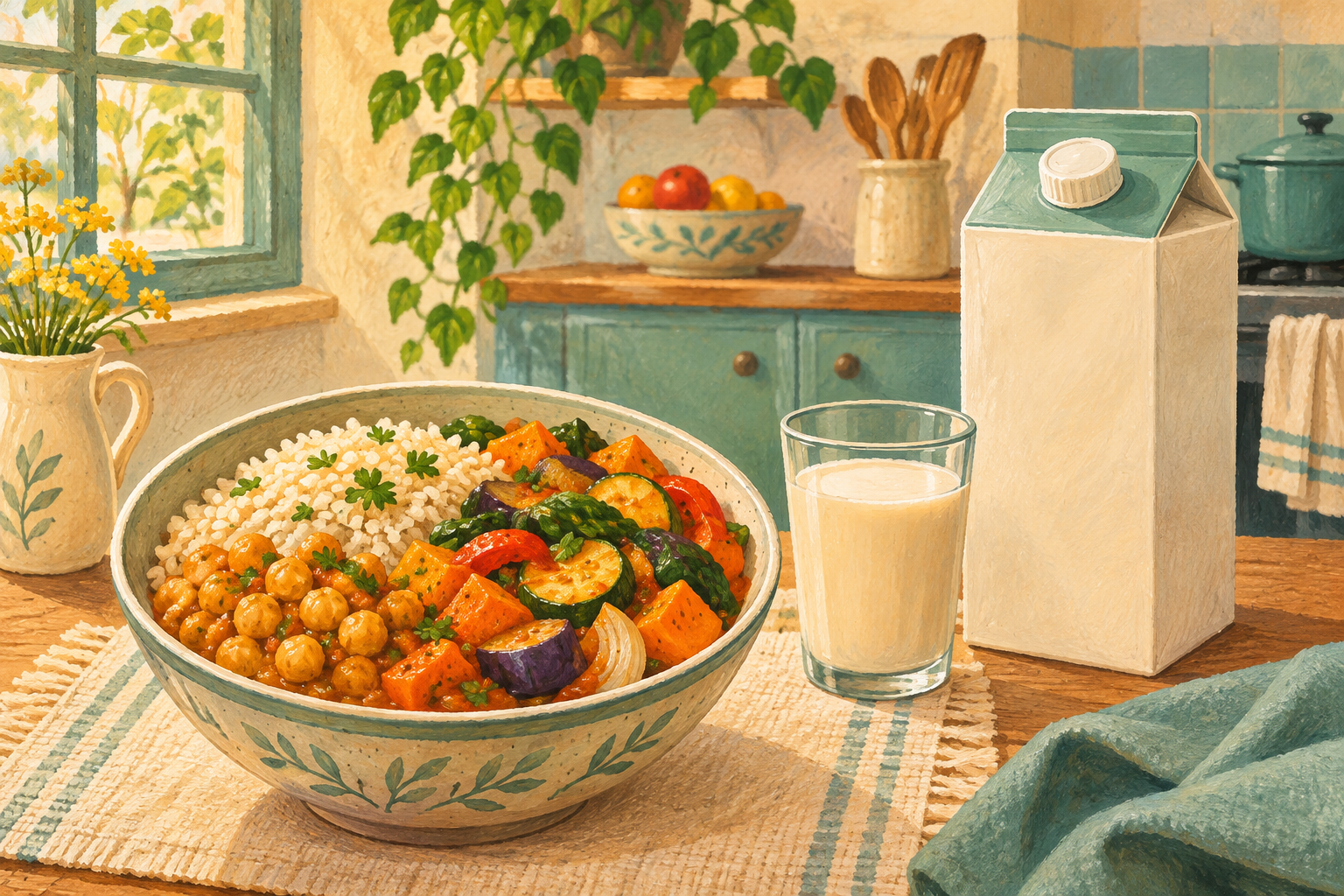
If you remove chicken from a familiar rice bowl, ask what will take its place. Adding chickpeas, beans or tofu gives you something substantial to build around. Keep the rice or other starchy food, add vegetables, and choose a sauce or seasoning you enjoy. This is a flexible meal idea, not a precise nutrient prescription.
Try making one familiar meal work before buying a cupboard full of unfamiliar ingredients. A lentil pasta sauce, bean-filled wrap or tofu stir-fry can be easier to repeat than a complicated recipe with ten new purchases.
Give B12 a reliable place in a vegan diet
The NHS notes that vegan B12 sources are limited: fortified cereals, fortified soya drinks and fortified nutritional yeast are examples, and a supplement may be needed. Do not assume nutritional yeast or a plant drink contains B12 unless the label says so. NHS vegan-diet guidance.
Make a concrete plan for your usual week, including which products you actually buy. If you are unsure whether that plan meets your needs, ask a dietitian or pharmacist about suitable options rather than guessing a supplement dose.
Check more than the word plant-based
Food Standards Scotland recommends paying attention to calcium, B12 and iodine when animal foods are excluded, and checking fortified alternatives. A carton can contain calcium without necessarily containing every other nutrient you are looking for. Official planning guidance.
For a quick shopping check, photograph the labels of the products you use regularly. Compare the nutrients listed and serving amounts. Our plant-milk label guide explains that comparison in more detail.
Skills and enough food matter more than a score
The study was funded by Forte, with no competing interests declared. It was cross-sectional and cannot establish that nutrition knowledge caused a better diet. Study limitations and disclosures.
For ages 16–17, changing dietary patterns should still leave enough food for growth, school and activity. A parent or qualified dietitian can help with planning if several foods are being excluded. There is no need to turn the study’s index into a personal target.
MacroTracker’s food diary can help you review whether your planned foods actually appeared in meals. It cannot diagnose a nutrient deficiency. Use the record to support practical planning, not as proof that a diet label guarantees adequacy.
Sources
AI-assisted article, checked against the linked sources. No clinical review is claimed. General education, not individual medical advice. Read our editorial standards and correction policy.