Fermented foods: what a gut-health claim actually tells you
Fermented foods, live cultures and probiotics are different claims. Learn what a small human trial found and how to shop without chasing miracle foods.
Lab changes are not the same as fewer illnesses
Evidence-based explainer. A small 2021 Stanford study found increasing gut-microbe diversity and decreasing inflammatory markers in healthy adults eating more fermented foods. It did not establish how much someone’s risk of illness would fall. Recent coverage has resurfaced this older research; it is not a new 2026 trial. Original study abstract and figures.
There were 18 people per diet arm: higher fermented-food intake or higher fibre intake, within a 17-week protocol. Most were randomized; two requested the fibre arm. The reported fermented-food marker changes compare follow-up with that group’s own baseline. There is no single percentage here meaning “better gut health,” and this small adult study does not establish a daily serving prescription for teenagers.
Three words that are often confused
Fermented describes how a food was made using microbes. It does not necessarily mean living microbes remain when you eat it.
Live cultures indicates living microorganisms; it does not, by itself, establish a particular health benefit.
Probiotic has a more specific scientific meaning: living microorganisms with evidence of a health benefit when provided in adequate amounts. Evidence about identified strains cannot simply be transferred to every fermented product. These distinctions come from the International Scientific Association for Probiotics and Prebiotics. ISAPP explanation.
Ask what you are paying for
Before buying a premium product, separate three questions:
- Do I enjoy this food? Taste and convenience are legitimate reasons to choose it.
- Does it fit my needs? Check ingredients, allergens, storage directions and the nutrition label, just as you would for another food.
- What specific benefit is being claimed? Look for evidence on the actual product or relevant strains, amount and outcome. A vague promise to improve the gut does not answer those questions.
A useful shopping test is to imagine the same item without the front-of-pack wellness slogan. Would you still want it at that price? That is a budgeting question, not a medical test.
Keep meals bigger than one ingredient
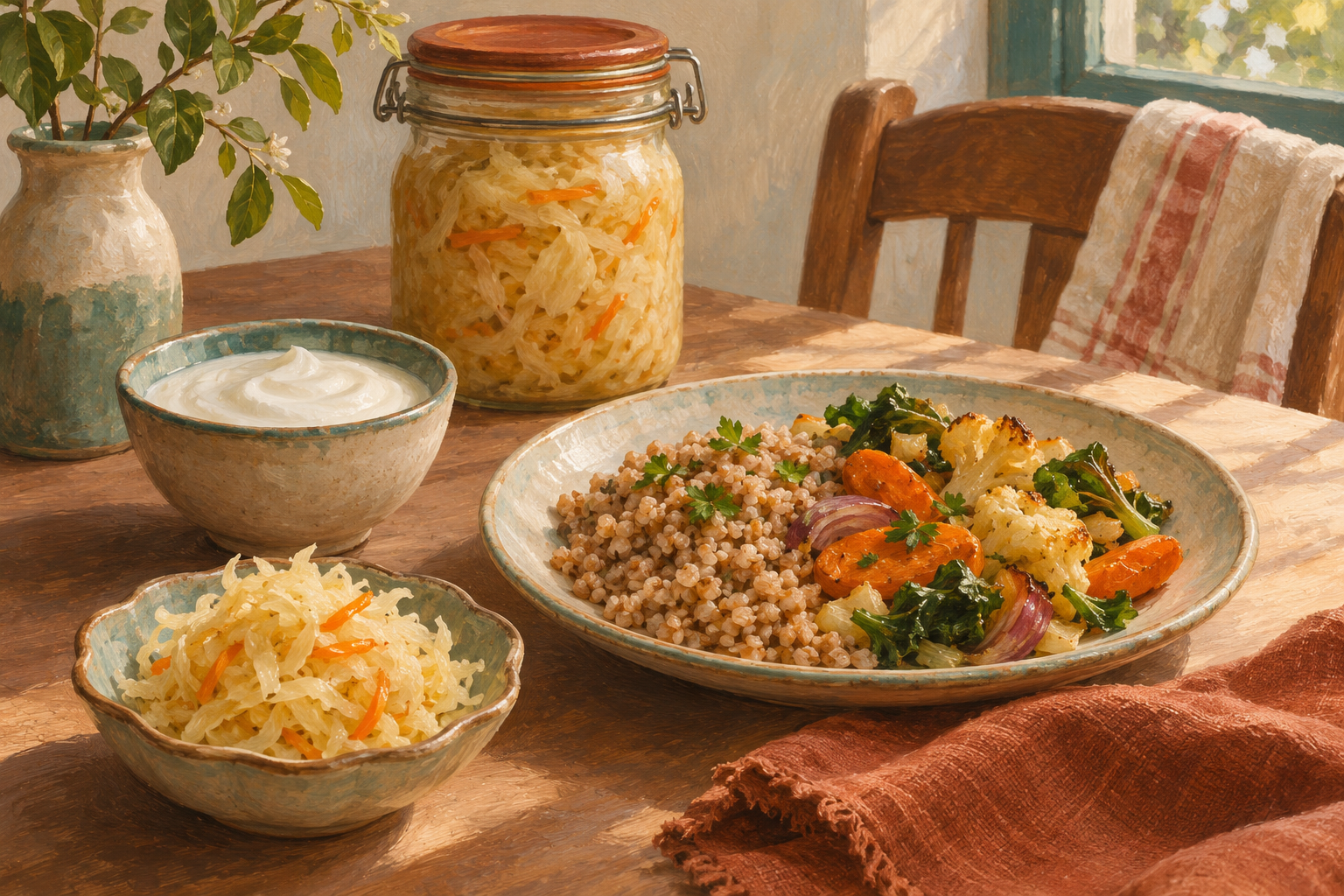
If you like yogurt, it can accompany a breakfast you already enjoy. If you like fermented cabbage, it can be a side dish. These are serving ideas, not a reproduction of the study or a treatment plan. There is no need to replace the rest of a varied diet with fermented products.
The study examined biological measurements over a short period, not long-term disease prevention. Its authors disclosed biotechnology company interests. Treat the findings as a reason for further research, not proof that an expensive product will work for you. Study and disclosures.
Use your diary for food, not a microbiome score
MacroTracker’s food diary can record the foods you eat. It cannot measure gut microbes, inflammation or whether a product is clinically effective. Keep the focus on meals you enjoy and can sustain; for ages 16–17, avoid turning food variety into restrictive rules or supplement targets.
For another fermentation claim, read our sourdough evidence guide.
Sources
AI-assisted article, checked against the linked sources. No clinical review is claimed. General education, not individual medical advice. Read our editorial standards and correction policy.