Are almonds worth adding to your snack routine?
An adult trial review found a modest LDL-cholesterol reduction with almonds. Understand the result, the funding and the practical snack decision.
What the evidence actually found
A 2025 review of randomised trials found that almond diets lowered LDL cholesterol by an average of 0.132 mmol/L compared with nut-free control diets. The estimated difference ranged from 0.075 to 0.190 mmol/L lower. That is a modest change in a blood marker, not proof that almonds prevented heart attacks. Original review.
The review combined 36 publications representing 2,485 adults without cardiovascular disease. Eligible trials lasted at least four weeks. This is an established-evidence explainer, not a newly discovered benefit or a treatment recommendation for teenagers.
Read the result with the funding in view
The Almond Board of California funded the review. The authors worked for a consultancy providing paid services to that organisation. Trials used different amounts and comparison diets; the pooled average is not a guaranteed personal response. Methods and disclosures.
Industry funding does not automatically erase a result, but it is relevant context. There is no reason to turn this one review into a claim that almonds are essential, uniquely effective or a substitute for prescribed treatment.
Choose the snack you will actually enjoy
The British Heart Foundation recommends plain, unsalted nuts and notes that there is no single best nut for cholesterol. Replacing some foods high in saturated fat with sources of unsaturated fat, including nuts, can help lower cholesterol. BHF guidance.
For everyday planning, start with taste, affordability and convenience. If almonds are expensive where you shop, compare the unit price of other plain nuts rather than paying extra for a health headline. The almond review does not prove every alternative has the same numerical effect.
Three ways to make them useful
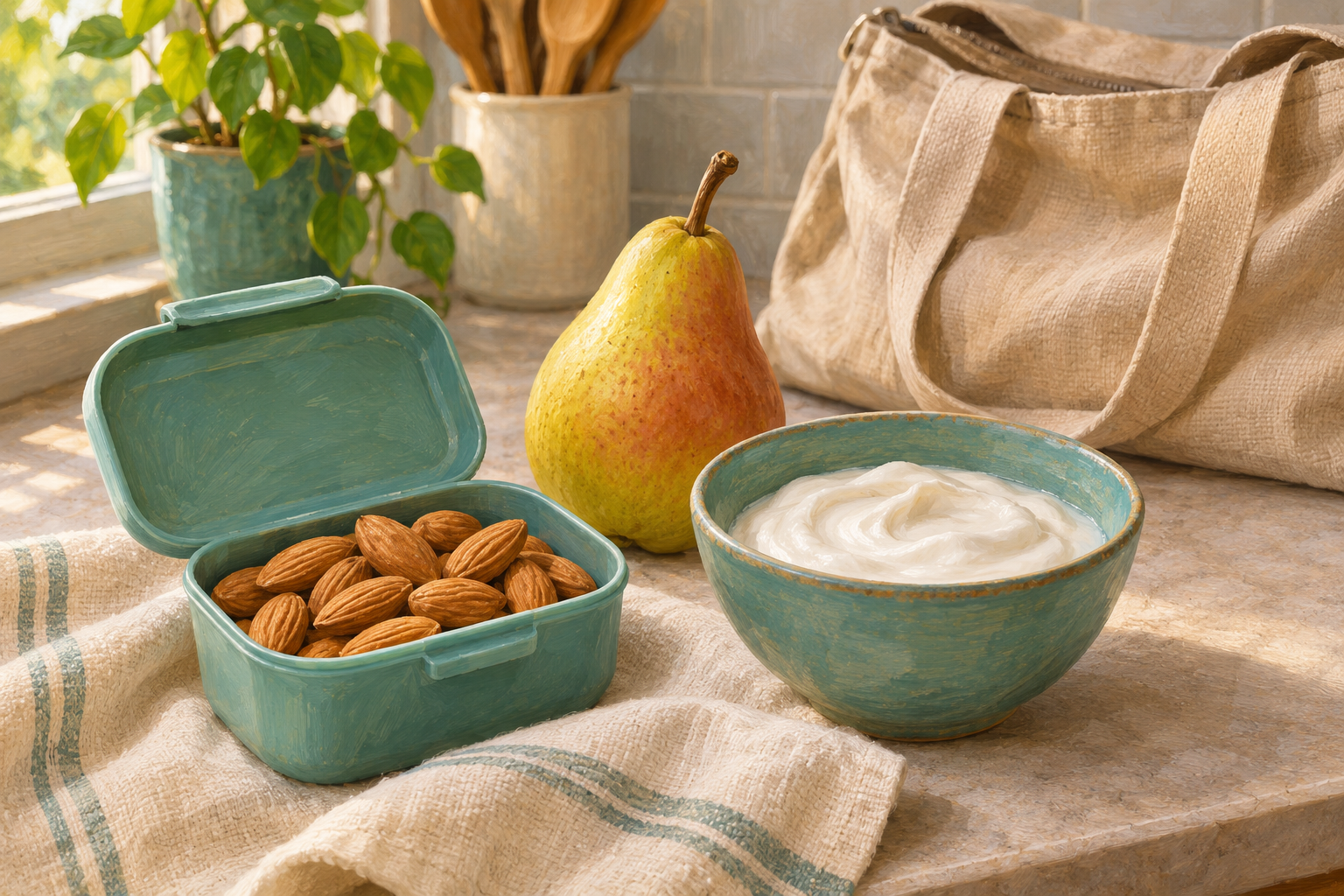
- Keep a reusable snack container ready for a commute or study day, alongside fruit if you want it.
- Add chopped almonds to porridge or yogurt for a different texture, rather than buying a new breakfast product.
- Use a little crunch in a meal you already make, such as a grain bowl, if you enjoy that combination.
These are serving ideas, not a clinical dose. A snack should fit your appetite and day; it need not replace a proper meal. Nuts are unsuitable if you have a relevant allergy, and shared school or workplace spaces may have allergy rules to respect.
Avoid turning food into a daily obligation
If you dislike nuts, there is no need to force them into your routine. Nor does an almond-containing bar or dessert automatically reproduce the diets tested in the trials. Look at the actual product and the role it plays in your meals.
For younger readers, the useful lesson is planning enough varied food, not pursuing a cholesterol number or restricting snacks. MacroTracker's food diary can help you remember which combinations worked on busy days. It cannot measure a cholesterol response; that requires appropriate clinical testing.
Sources
AI-assisted article, checked against the linked sources. No clinical review is claimed. General education, not individual medical advice. Read our editorial standards and correction policy.